Thrash Metal
A concise, reader-friendly thrash metal entry grounded in official band histories and genre overviews, with the early U.S. scene and the Big Four clearly documented.
Origins and context
Documented early scenes formed in the United States, especially the San Francisco Bay Area and East Coast metal circles, where NWOBHM influence met hardcore punk speed and aggression.
The sound
- Tempo
- Fast
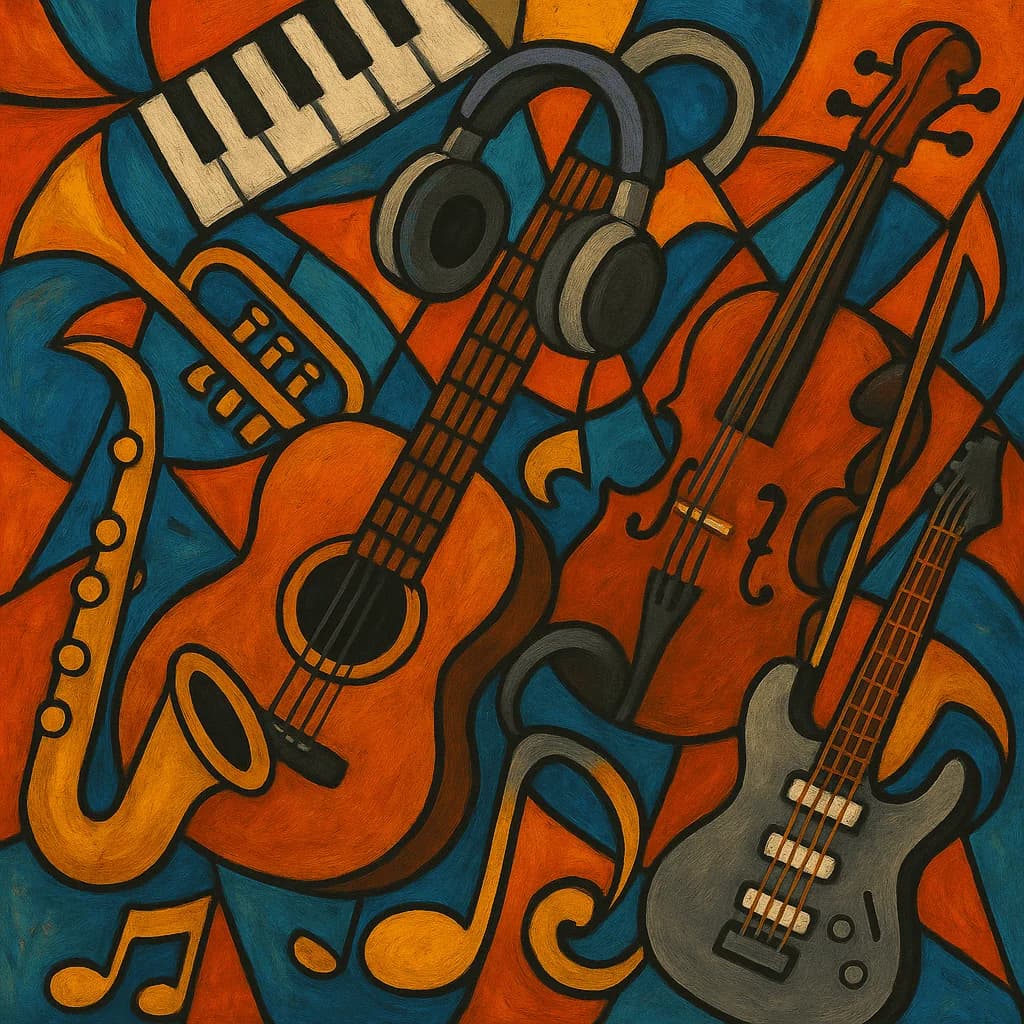
Instrument palette
The voices and tools most associated with this sound.
- Electric guitar
- Bass guitar
- Drums
How to listen
Listen for
- Tight, palm-muted riff patterns
- Double-kick propulsion
- Sudden tempo shifts and stop-start accents
Mood
- Driven, abrasive, and tightly wound
History
Thrash metal took shape in the early 1980s, drawing together the speed and attack of the New Wave of British Heavy Metal with hardcore punk’s blunt urgency. Metallica’s official history places the band’s early rise and the release of Kill ’Em All in 1983, while Anthrax identifies itself as one of the first East Coast thrash bands to emerge in 1981; Megadeth also frames its founding in 1983 as part of the genre’s initial surge. The style first hardened in scenes on both coasts of the United States, especially around the Bay Area, where metal and punk crowds overlapped and the music got faster, leaner, and meaner. By the mid-1980s, thrash had its signature records and its defining names—Metallica, Slayer, Megadeth, and Anthrax—enough that later histories routinely group them as the Big Four.
Notable artists
- MMetallica
- SSlayer
- MMegadeth
- AAnthrax