Lunar Boom Learning
Course overview

Lunar Boom learning path
How Machines Learn Music
A practical introduction to AI music data, models, training, and evaluation
A five-chapter Lunar Boom learning path explaining how AI music systems represent sound, use datasets, generate music, train models, and evaluate outputs.
Learn the system so you can build it
Each chapter touches upon the core concepts around the ever evolving field of AI music. The goal is for you to understand how AI music systems work, and perhaps encourage you to build your own.
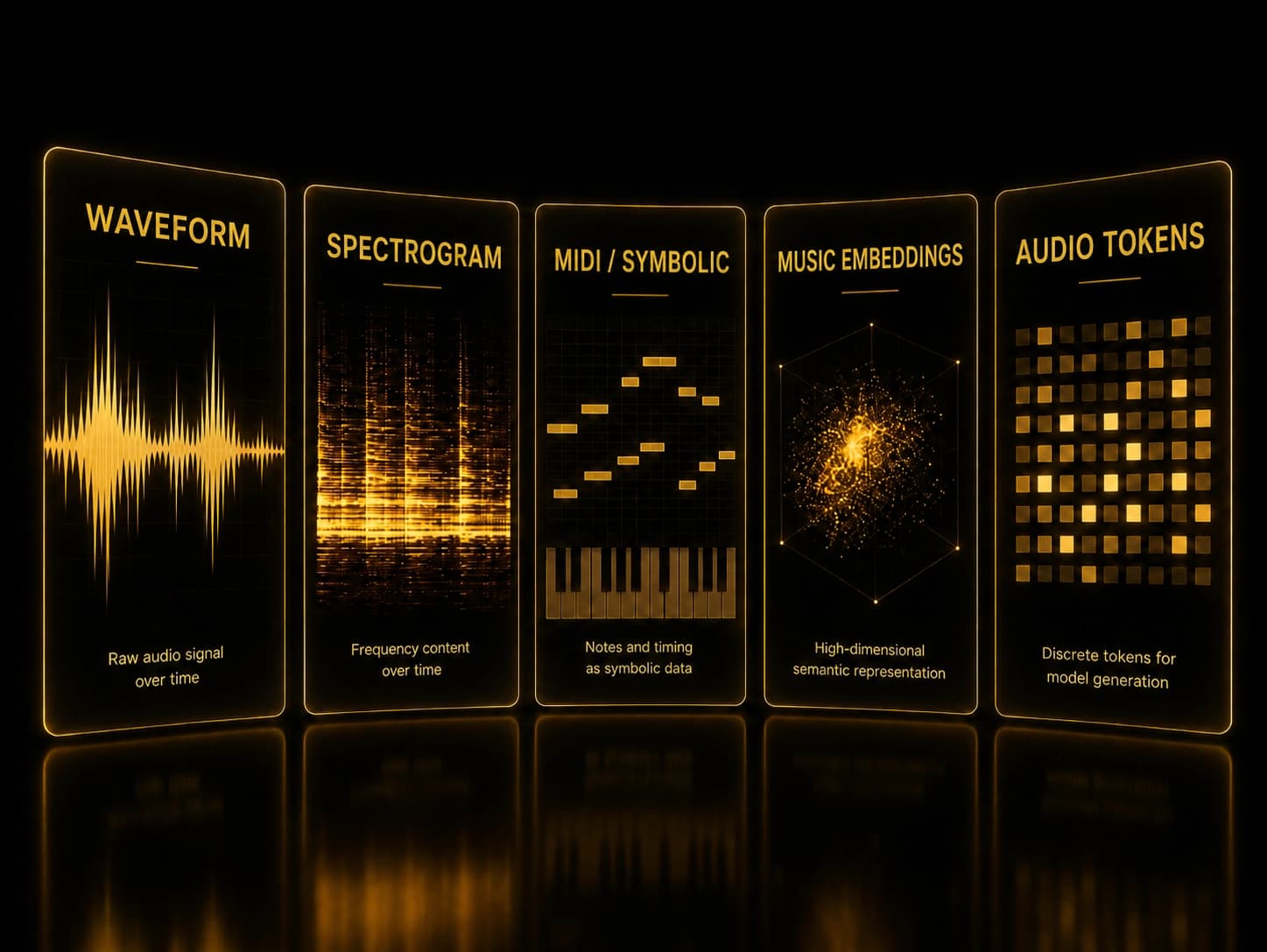
Chapter 1 · 45 min
Turning Music Into Data
Learn how sound becomes digital audio, compare waveforms, spectrograms, and MIDI, then examine how learned embeddings and neural audio codecs transform music into compact vectors and discrete token sequences.
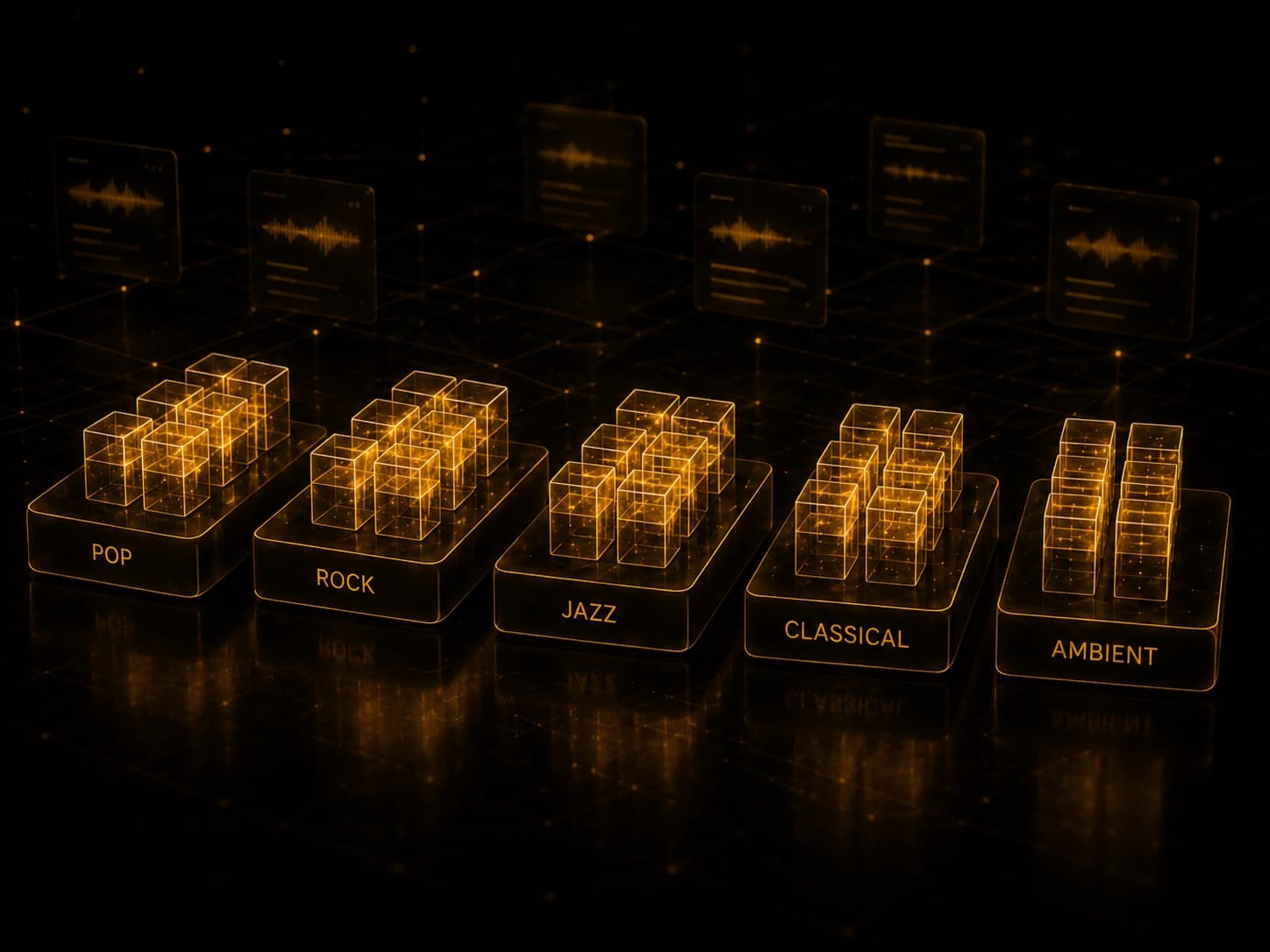
Chapter 2 · 55 min
Building the Musical Training Dataset
Learn how music training records are assembled, how audio is cleaned and described, how dataset composition shapes model behaviour, and how rights and provenance are documented.
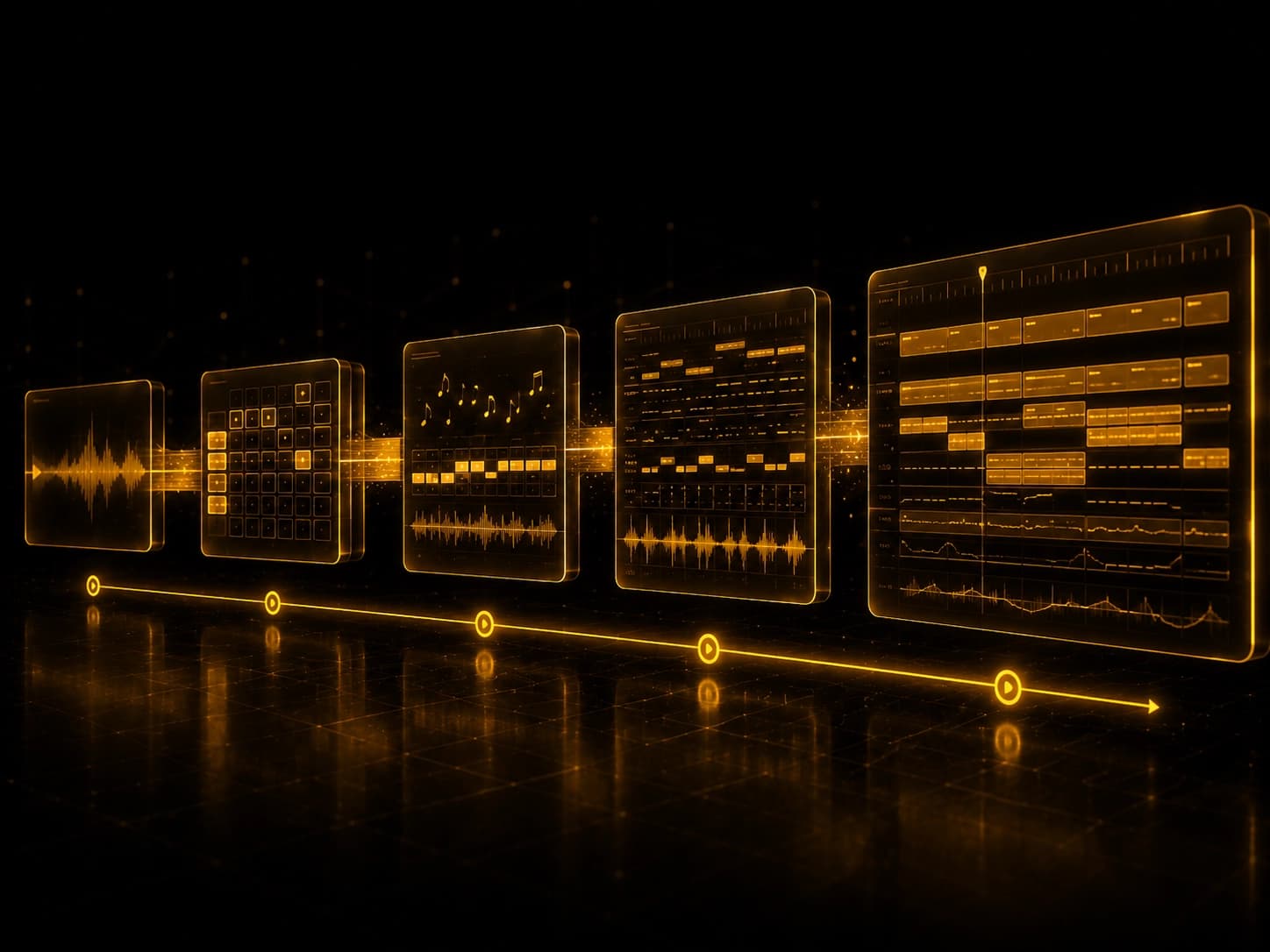
Chapter 3 · 79 min
How an AI Model Generates Music
Learn how AI music models turn context into predictions, generate token sequences, refine noisy representations, combine multiple levels of detail, respond to control signals, and attempt to organise music across several minutes.
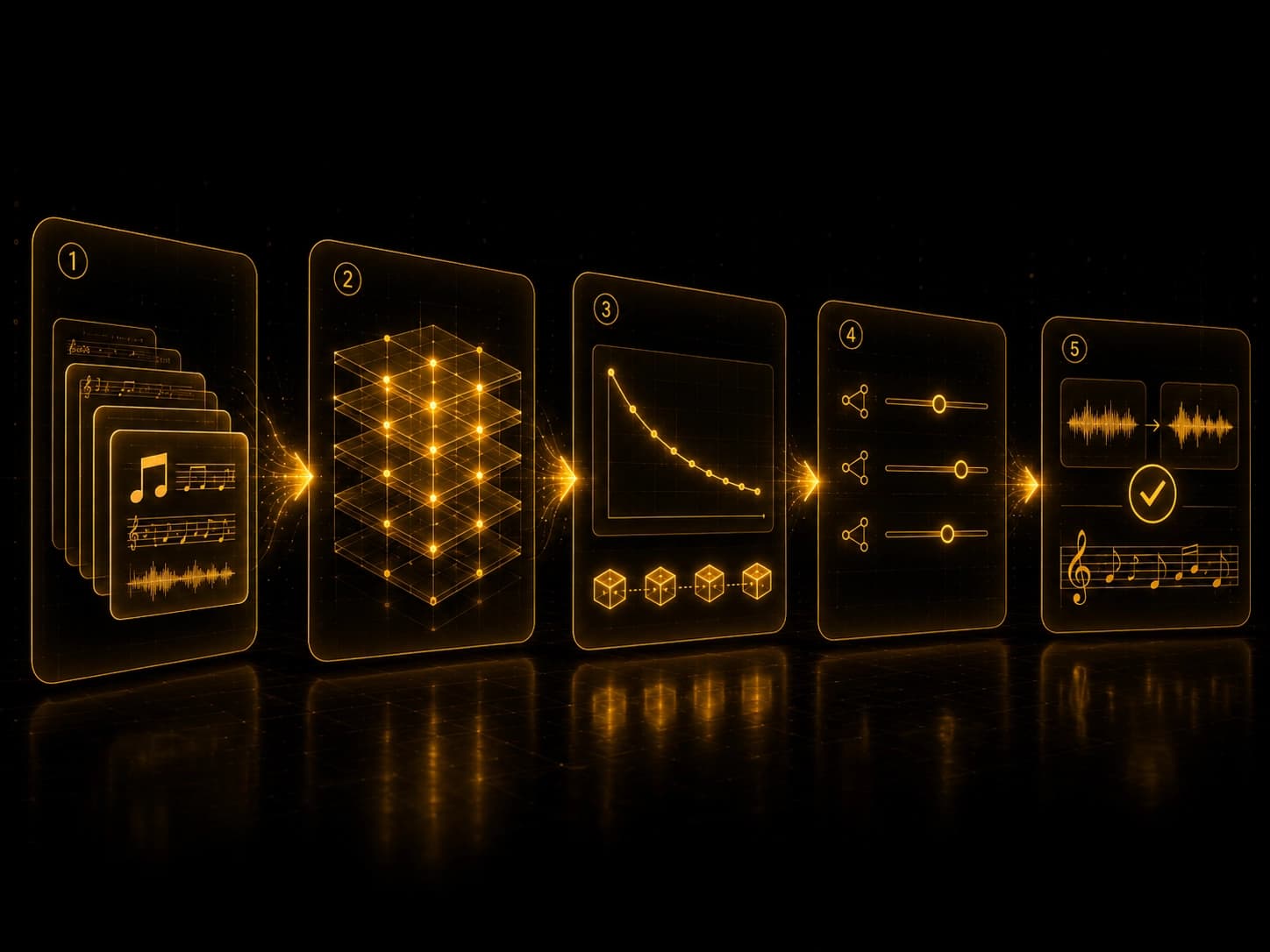
Chapter 4 · 94 min
Training and Fine-Tuning a Music Model
Learn how music models improve through batches, losses, gradients, and parameter updates, then compare training strategies, design a controlled symbolic-music experiment, detect overfitting and memorisation, plan compute infrastructure, and debug failed training runs.
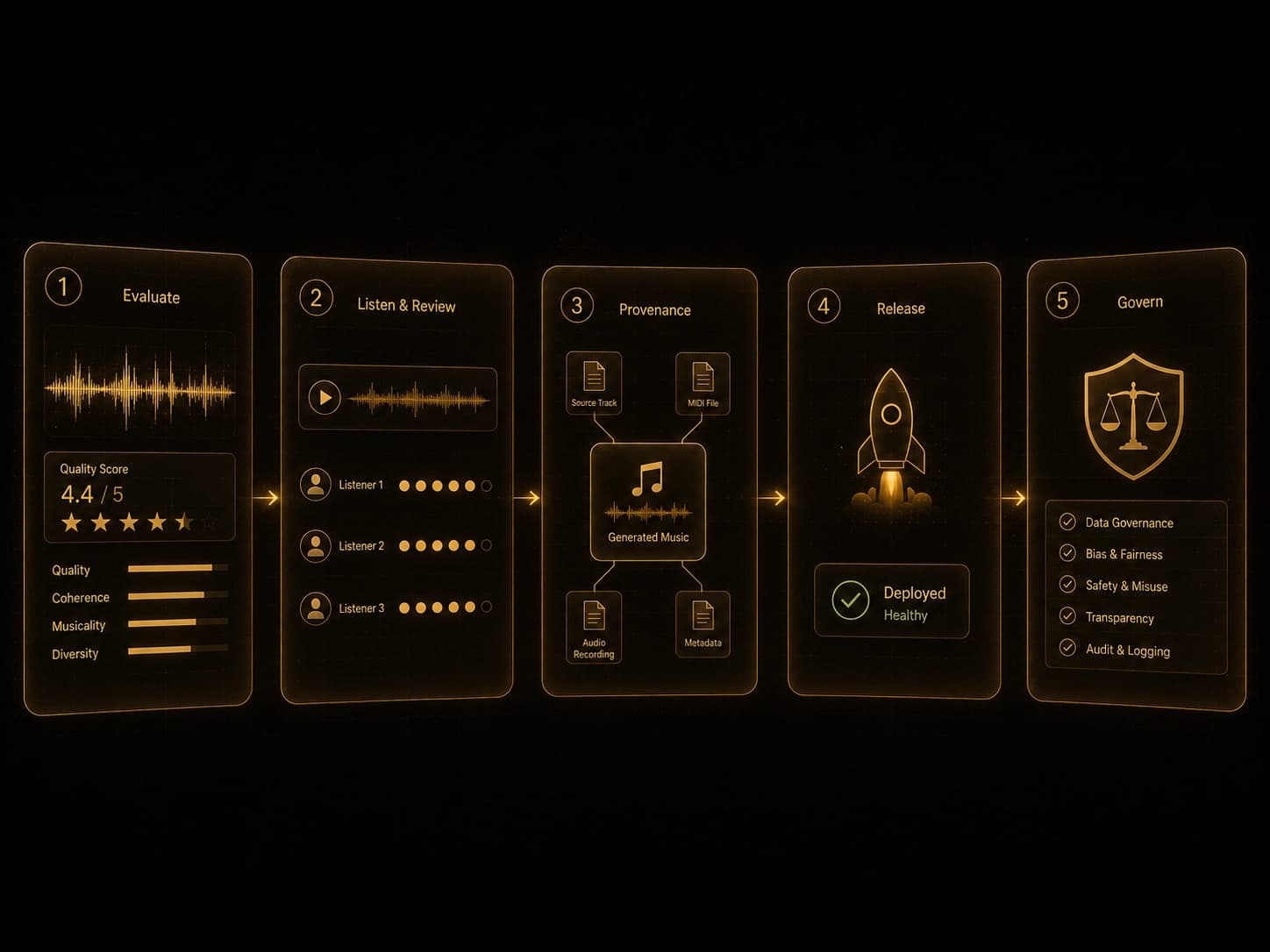
Chapter 5 · 102 min
Evaluating, Releasing, and Governing the Model
Learn how to evaluate generated music across technical, musical, perceptual, and practical dimensions, combine automated metrics with controlled listening tests, investigate similarity and memorization, preserve attribution and provenance, operate a dependable generation product, and assess future AI music capabilities without confusing demonstrations with established maturity.