
Instrumental music
Also known as instrumental music
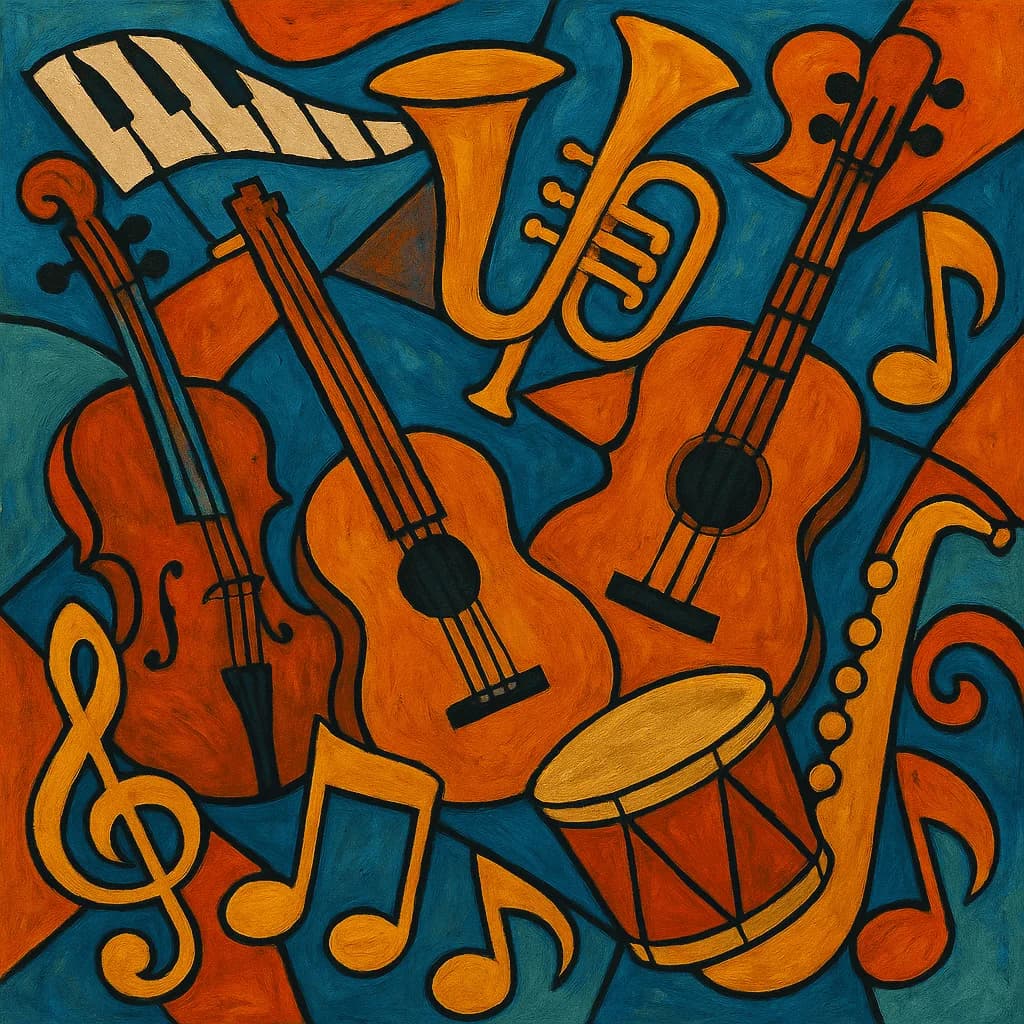
A very broad tag rather than a tightly bounded style, instrumental music links centuries of repertory with today’s cross-genre listening habits.
Origins and context
The label describes music defined by the absence of vocals, so its history spans multiple regions and traditions rather than a single place of origin.
The sound
Characteristics
- No lyrics or lead vocals
- Melody-forward arrangements
- Instrument-specific timbres
- Wide stylistic range
How to listen
Start here
- Solo piano
- String quartets and chamber works
- Jazz instrumentals
- Ambient and electronic instrumentals
- Film scores and soundtrack cues
History
Instrumental music has been part of musical life for a very long time, but the written record becomes much clearer in the Renaissance, when composers began leaving more surviving music meant for instruments alone or for instruments in mixed settings. Sources on Renaissance and early-modern music note the growing importance of dances, intabulations, and consort writing, while later Baroque and Classical repertories gave instrumental forms an even larger public life. In the modern era, “instrumental” is less a single genre than a broad listening lane that stretches across classical, jazz, electronic, ambient, pop, and soundtrack music. Album and artist pages for players such as George Winston show how strongly the idea lives in contemporary listening culture, where the absence of vocals can make space feel larger, quieter, and more immediate.
Notable artists
- JSJohann Sebastian Bach
- GWGeorge Winston
Essential listening
- 1
The Well-Tempered Clavier, Book 1: Prelude & Fugue No. 1 in C Major, BWV 846
Johann Sebastian Bach
- 2
- 3
- 4
Explore connected genres
Sources and further reading
- Music, Instrumental
- en.wikipedia.org
Renaissance music included notated instrumental and mixed vocal/instrumental works, and later instrumental traditions expanded further.
- Contemporary Instrumental
- Apple Music
George Winston’s Apple Music artist page identifies him as a mostly instrumental New Age artist and highlights the album December.
- Instrumental Pop