YouTube Music, as Music Ally details, introduced labels for tracks created primarily with generative AI on October 14, 2026. Music Business Worldwide reports that music partner disclosures and the platform’s detection tools will help identify qualifying tracks. The immediate significance is practical. AI provenance is moving into the listening interface, where disclosure rules, detection confidence and catalogue handling become visible product choices rather than abstract policy commitments.
YouTube puts AI provenance in the interface
YouTube Music, according to Music Ally, put its labeling system live on October 14, 2026, with an AI button explaining how a song was made. Music Business Worldwide says the service will combine music partner disclosures with its own detection tools when identifying tracks created primarily with generative AI. Meanwhile, The Verge describes a Made with AI label covering tracks altered or fully generated with AI, plus disclosure rules for music partners. The approach places both supplied metadata and platform analysis inside the same product. What is not yet clear is how conflicting signals will be resolved. The practical effect is that labeling standards now depend partly on each platform’s own taxonomy.
Deezer turns detection into a listener control
Deezer, as Music Week details, is adding a global filter that will let users remove fully AI generated music from their streaming experience by the end of 2026. Deezer Newsroom reports that its detection tool, in use since early 2025, can identify and exclude AI generated music from recommendations and is now being licensed to other organisations. The filter turns classification into a listener choice rather than only an internal moderation signal. Licensing creates a separate business path for the detection system. What remains open is whether outside adopters will use Deezer’s categories consistently or connect them to recommendation and royalty decisions.
DistroKid removals raise process questions
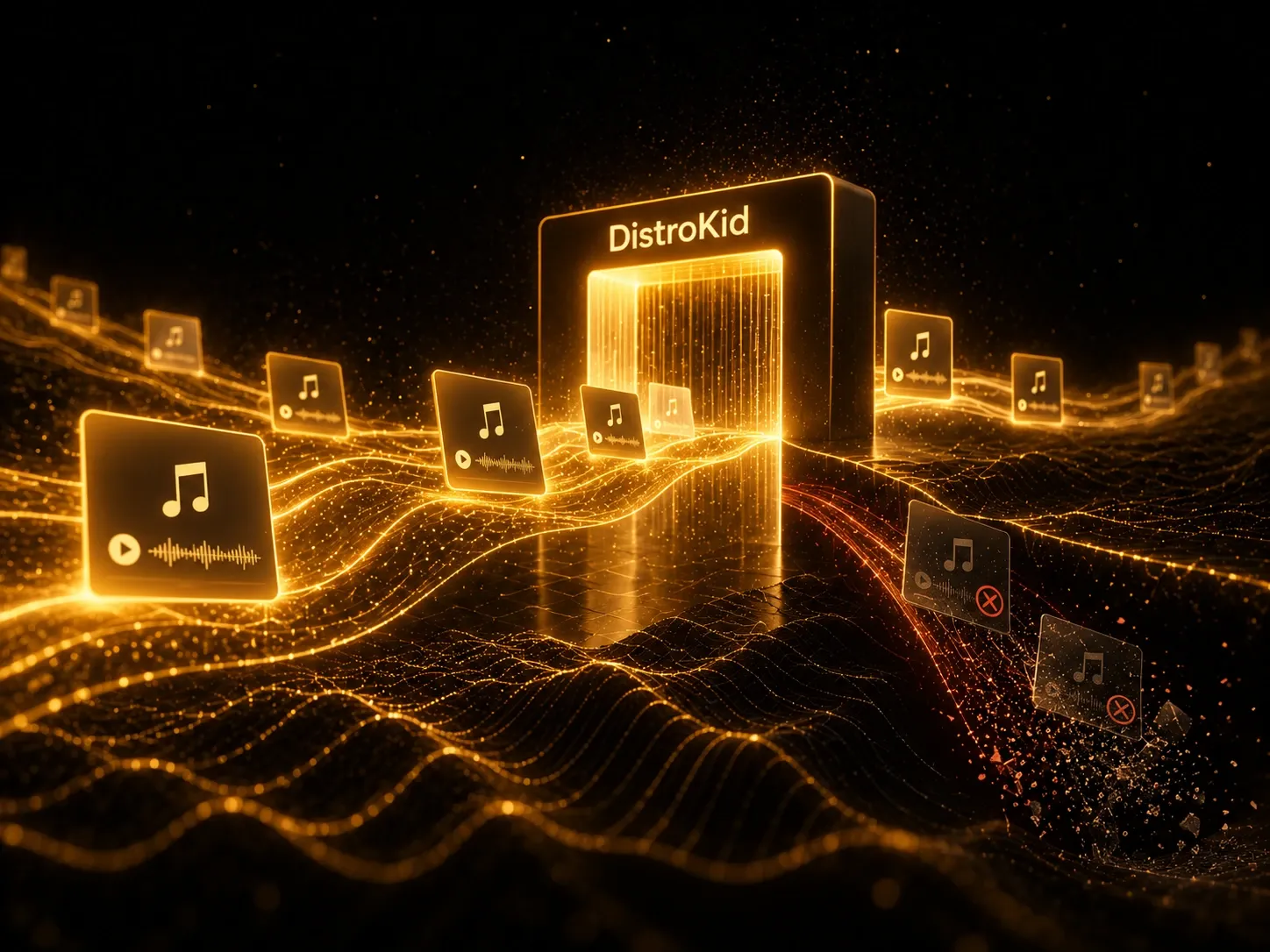
DistroKid, according to Mubert, confirmed that it removed several songs in connection with Universal Music Group’s lawsuit alleging copyright infringement and deceptive trade practices. Mubert also says artists described removals without prior notice and that some affected tracks were not made with AI. Those artist accounts remain allegations within the report, not independently established facts. The practical issue is narrower than whether a track is synthetic. Distributors also need processes for notice, evidence and appeal when legal claims reach catalogues. What is not yet clear is how DistroKid distinguished the challenged recordings or reviewed non AI material. For creators, the unresolved point is procedural as well as technological.